Is knee pain keeping you from walking, climbing stairs, or enjoying your everyday life? Experience the most advanced solution for knee arthritis at Germanten Hospital, Hyderabad’s Center of Excellence in Orthopedics with Robotic Knee Replacement Surgery powered by German precision and cutting edge technology.
Robotic-assisted knee replacement offers unmatched accuracy, faster recovery, and long-lasting implant performance. Whether you're in need of a partial or total knee replacement, our robotic systems ensure your knees are aligned perfectlyjust the way nature intended. Robotic-assisted knee replacement offers unmatched accuracy, faster recovery, and long-lasting implant performance. Whether you're in need of a partial or total knee replacement, our robotic systems ensure your knees are aligned perfectlyjust the way nature intended.
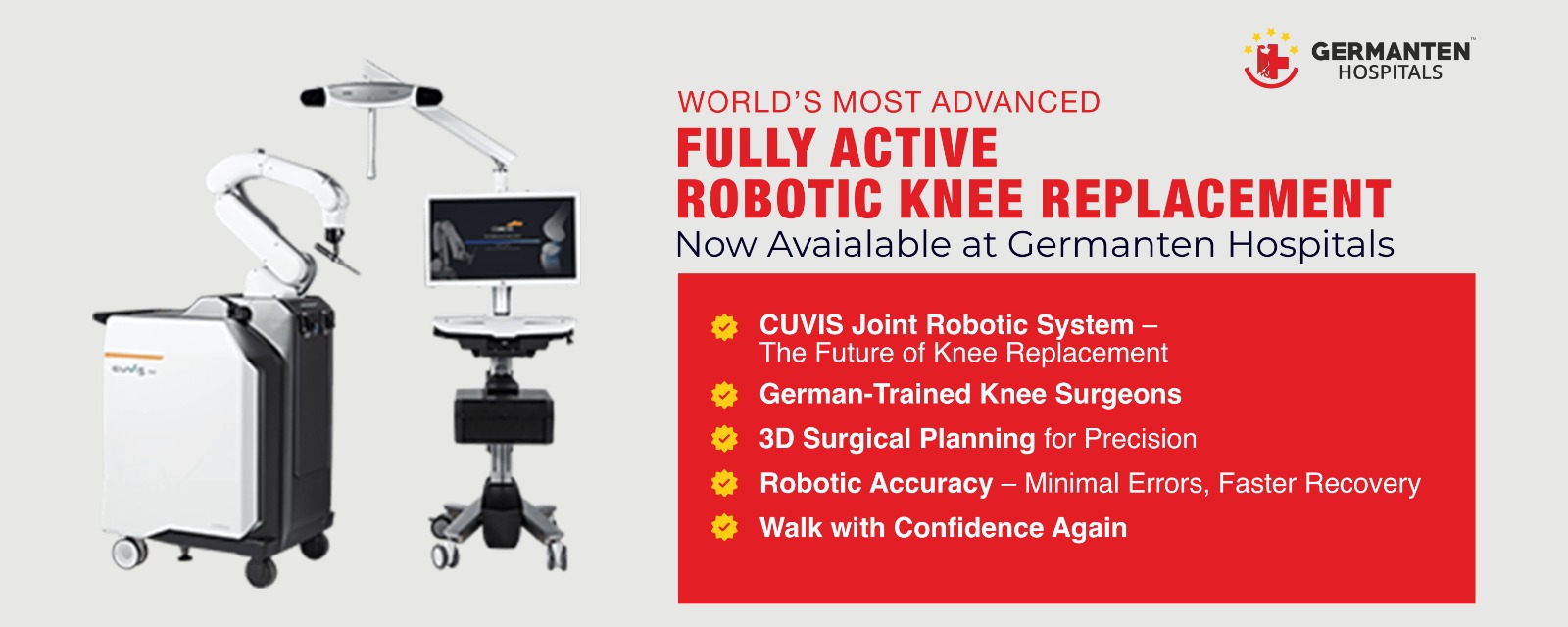
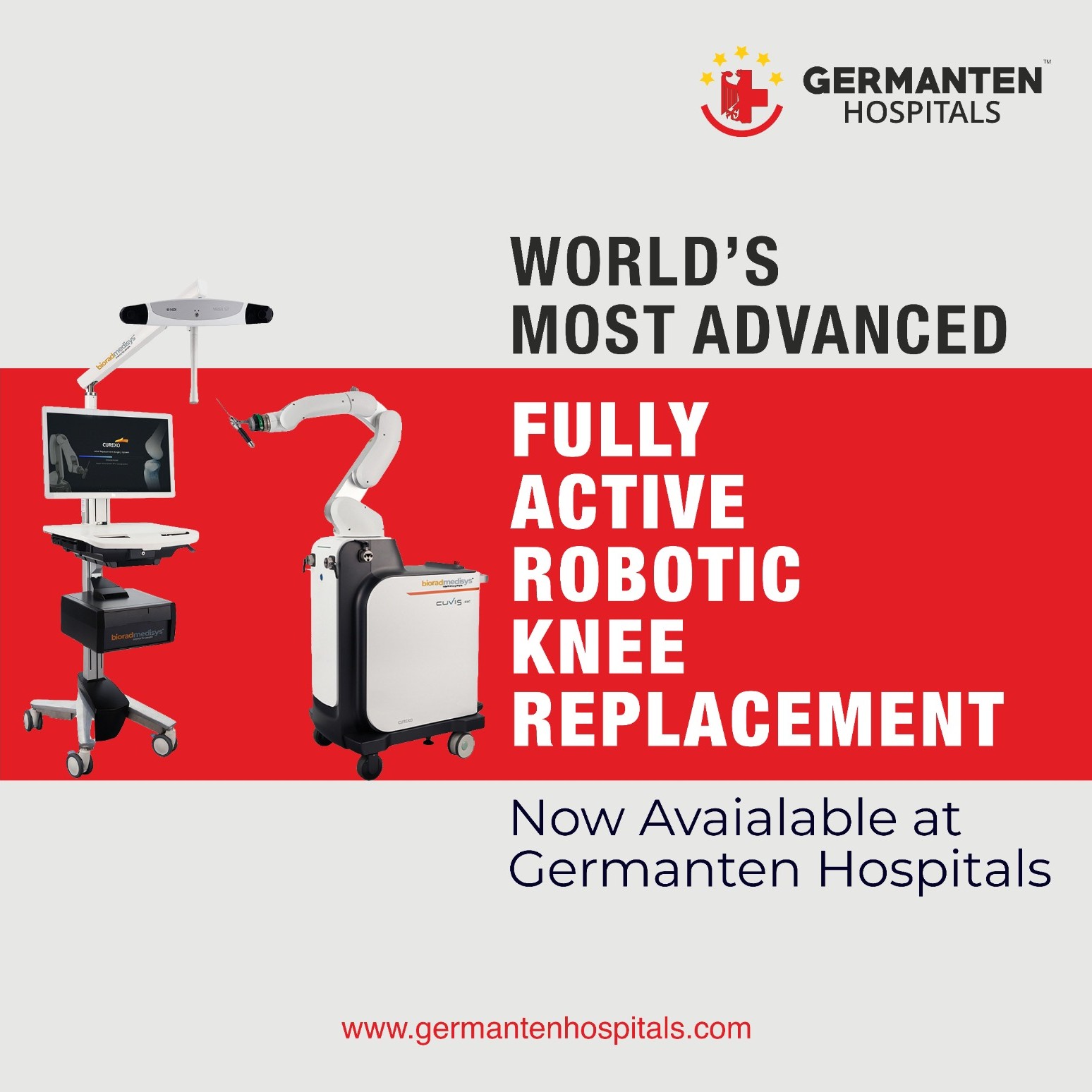
Robotic Knee Replacement is a modern surgical technique where a robotic arm assists the surgeon in performing knee replacement with sub-millimeter precision. The robot creates a 3D virtual model of your knee and helps guide the surgery to ensure accurate bone cuts, proper implant placement, and personalized joint alignment.
The surgeon is always in control, but the robot enhances precision, safety, and efficiency throughout the procedure.
Robotic knee replacement surgery helps the surgeon create a personalized treatment plan based on the shape, alignment, and condition of each patient’s knee. The technology supports detailed planning for implant size, bone preparation, and joint positioning. The surgeon remains fully in control throughout the procedure and uses robotic assistance as a precision tool.
At Germanten Hospital, robotic knee replacement care includes consultation, diagnostic evaluation, surgical planning, anaesthesia support, post-operative care, physiotherapy, and follow-up guidance. Patients receive clear information about their knee condition, treatment options, recovery process, and rehabilitation requirements.
If you are searching for robotic knee surgery near me, Germanten Hospital in Hyderabad offers consultations with joint replacement specialists. The doctor evaluates your symptoms, X-rays, medical history, knee alignment, and previous treatments before recommending the most suitable treatment option.
Robotic planning helps the surgeon assess the knee in greater detail before making bone cuts or placing the implant. This can be especially useful for patients with joint deformities, previous knee injuries, or complex alignment concerns. Advanced imaging and computer modelling enable a highly customized surgical plan that aims for optimal implant fit and alignment, reducing the risk of complications.
Recovery and long-term outcomes may vary depending on the patient’s health, implant type, surgical plan, and commitment to physiotherapy. Robotic planning helps increase the precision and predictability of surgery, supporting better patient outcomes and faster rehabilitation.
Robotic knee surgery is ideal for:
Robotic knee replacement may be considered when knee arthritis causes persistent pain and affects daily life. You may need a consultation if knee pain affects walking, sleep, climbing stairs, standing, or routine activities. Patients with severe stiffness, swelling, deformity, instability, or limited relief from medicines and physiotherapy may also be assessed for surgery.
Before surgery, patients undergo a medical assessment that may include blood tests, imaging, anaesthesia clearance, and review of current medications. After surgery, rehabilitation focuses on safe walking, pain management, knee movement, muscle strengthening, and regular physiotherapy. Recovery timelines differ for every patient.
Robotic total knee replacement may be recommended when arthritis affects most or all areas of the knee joint. Robotic partial knee replacement may be considered when arthritis is limited to one compartment of the knee and healthy bone, cartilage, and ligaments can be preserved. The surgeon recommends the suitable procedure after reviewing scans, symptoms, and knee movement.
Robotic surgery involves a higher investment in technology but offers better outcomes and fewer complications in the long run.
Estimated Cost: ₹2.2 Lakhs – ₹4.5 Lakhs*
*Includes pre-op imaging, surgery, implant, hospital stay, and rehabilitation.
Insurance and EMI options available.
The final cost of robotic knee replacement may vary based on the type of procedure, implant selected, medical condition, surgical complexity, pre-operative tests, hospital stay, medicines, physiotherapy, and insurance coverage. Patients should ask for a detailed treatment estimate that clearly explains all inclusions and exclusions.
| Feature | Robotic Knee Replacement | Traditional Knee Replacement |
|---|---|---|
| Precision | High | Surgeon-dependent |
| Recovery Speed | Faster | Moderate |
| Blood Loss | Minimal | More |
| Pain After Surgery | Less | Moderate |
| Implant Longevity | Longer lifespan | Standard |
| Return to Activity | Early | Delayed |
Both robotic and traditional knee replacement procedures aim to reduce pain and improve mobility for suitable patients. Robotic surgery adds computer-assisted planning and real-time guidance, while traditional surgery relies on standard surgical instruments and the surgeon’s expertise. The most appropriate option depends on the patient’s anatomy, knee condition, medical history, and surgeon’s recommendation.
Patients searching for “knee replacement best hospital in India” should look for experienced joint replacement surgeons, advanced technology, quality implants, safety protocols, physiotherapy support, transparent costs, and regular follow-up care. The right hospital should provide a personalized treatment plan based on the patient’s individual knee condition and recovery needs.
Before choosing a hospital, patients should ask about the surgeon’s experience, robotic technology availability, implant options, infection-prevention measures, rehabilitation programme, treatment cost, insurance support, and post-surgery follow-up care.


Mr. Vishwanath Rao from Hyderabad, underwent Knee Replacement Surgery

Mr. MD Ibrahim Khan, 55 years old from Hyderabad, underwent ACL Surgery at Germanten Hospital.

Mr. Gulshan Kumar from Hyderabad, underwent Total Knee Replacement Surgery at Germanten Hospital.

Mrs. Deepika Rawat underwent ACL Reconstruction Surgery at Germanten Hospital.

Mr. Anil Ahuja, 65 years old from New Delhi, underwent Total Knee Replacement Surgery at Germanten Hospital.

Mr. Rabul Islam from Assam, underwent ACL Surgery at Germanten Hospital.

Mr. Abdul Ali, 70 years old from Dubai, underwent Knee Replacement Surgery at Germanten Hospital.

Mr. Afeef from Hyderabad, underwent Bone Fracture Surgery at Germanten Hospital.

Mr. Ibrahim, 25 years old from Dubai, underwent ACL Surgery at Germanten Hospital.

Mr. Abdul Ali, 20 years old from Kenya, underwent ACL Surgery at Germanten Hospital.
Connect with our experts doctors for guidance