10 Massages and Stretches for a Frozen Shoulder
June 15, 2023
Stem cell and PRP therapy use your body's natural healing elements to repair damaged joints, offering pain relief and improved function without surgery for early-stage arthritis patients.
I remember the look on Mrs. Sharma's face when another surgeon told her she needed knee replacement surgery. She was only 52. "But I'm not ready for that," she said, tears in her eyes. "Isn't there something else I can try first?"
This conversation happens in my clinic almost every day. You walk in with knee pain that won't quit. You've tried physical therapy. You've swallowed enough pain pills to fill a pharmacy. The X-rays show arthritis. And suddenly, surgery feels like your only way out.
But here's what most people don't realize: if you catch arthritis early enough, you have options that don't involve going under the knife.
I've spent over 25 years as an orthopedic surgeon, and I've seen the field transform. Today, we have treatments that seemed like science fiction when I started my career. Stem cell therapy and PRP (platelet-rich plasma) injections can help many patients avoid or delay surgery, sometimes by years.
The catch? Timing matters more than you think.
Let me share what I wish every patient knew about these treatments before they rush into surgery or, worse, wait too long to do anything at all.
Your window of opportunity closes a little bit each day. Research shows that patients with advanced arthritis face a 25 times higher risk of needing knee replacement within 9 years compared to those who seek treatment early. That number should make you sit up and pay attention.
Think of your joint like a leaking roof. Fix a few shingles today, and your house stays dry. Wait until water damages the beams, and you're looking at a complete rebuild. Your cartilage works the same way.
Doctors grade arthritis from 1 to 4:
Grade 1-2 (Early Stage): You still have visible joint space on X-rays. Your cartilage shows wear but hasn't disappeared. This is your golden window for regenerative medicine.
Grade 3 (Moderate): Joint space narrows significantly. You've lost considerable cartilage. Regenerative treatments can still help, but results vary more.
Grade 4 (Severe): Bone touches bone. No cartilage cushion remains. Surgery becomes almost inevitable.
Most patients I see fall into that tricky middle ground. They're too advanced for simple rest and pills, but not severe enough that surgery feels urgent. This is exactly where stem cells and PRP shine brightest.
If you're reading this and wondering if it's too late for you, ask yourself: Can you still see space between your bones on an X-ray? Does rest or ice still help your pain, even a little? If yes, you're likely still in the game.
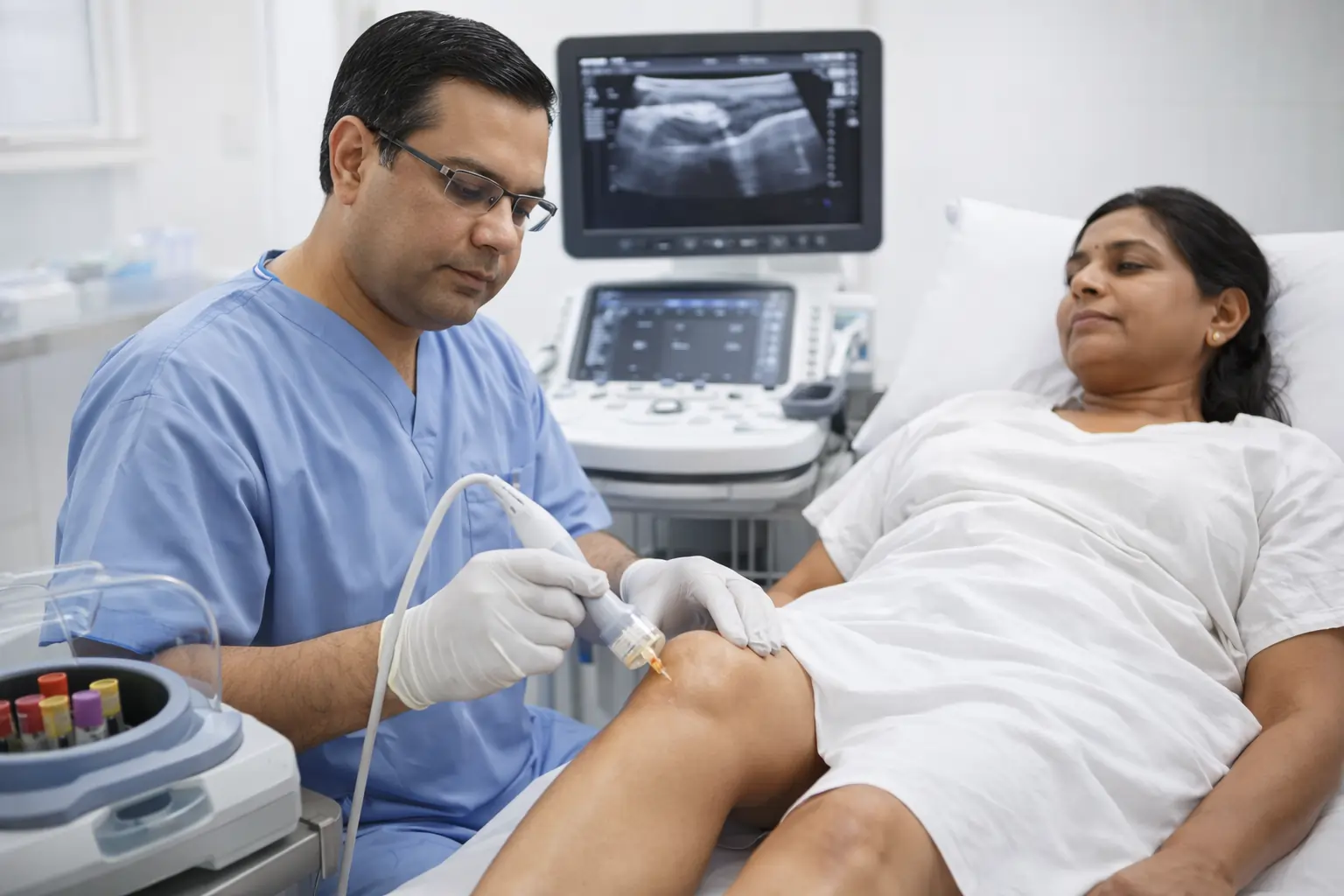
PRP therapy sounds almost magical when you first hear about it. We draw your blood, spin it in a centrifuge, and inject concentrated platelets back into your painful joint. Professional athletes use it. Maybe you've heard about Tiger Woods or Kobe Bryant getting PRP injections.
But here's what most clinics won't tell you upfront: PRP doesn't regrow your cartilage.
Let me be honest with you because I believe patients deserve the full picture. PRP is what we call "symptom-modifying, not structure-modifying." It reduces inflammation, signals your body to slow down cartilage breakdown, and helps manage pain. For many patients, that's enough to get back to gardening, playing with grandkids, or walking without wincing.
Not all PRP is created equal. This shocks most patients when they learn about it.
The concentration of platelets in your PRP can vary by 3 to 10 times depending on:
I've seen patients get PRP at one clinic with mediocre results, then come to us for a second opinion. When we prepare their PRP properly and achieve the right concentration (we aim for 5-10 times your baseline platelet count), they finally experience the relief they expected the first time.
What to ask any provider: "What platelet concentration will my PRP have?" If they can't give you a specific number, that's a red flag.
PRP works best for:
Cost reality: Expect to pay ₹80,000 to ₹2,50,000 per injection area. Most insurance companies still consider it experimental, though that's starting to change in 2025.
Timeline: You won't jump off the table feeling better. Initial relief typically comes in 2-3 weeks. Full results take 6-12 weeks. Effects last 6-9 months on average, though some patients get longer relief.
If PRP is like sending a text message to your body saying "heal this area," stem cells are like shipping in an entire construction crew.
Stem cells don't just signal healing. They provide actual building blocks for new tissue. These cells can transform into cartilage, bone, or tendon cells depending on what your joint needs. The effects last longer, typically 1-2 years or more.
Bone Marrow (BMAC): We extract stem cells from your hip bone. This remains the gold standard for orthopedic use. Yes, it's more invasive. We literally use a needle to pull marrow from your iliac crest. But the quality and concentration of stem cells make it worth the extra discomfort for many patients.
Fat Tissue: A less invasive option where we harvest fat from your belly through mini-liposuction. It contains mesenchymal stem cells that work well for joint issues.
What to avoid: Donor cells, placental cells, or embryonic sources. Your body often rejects these, and the regulatory landscape remains murky.
Stem cell therapy runs from ₹4,00,000 to ₹12,00,000 or more, depending on complexity. I won't sugarcoat it. That's significant money out of pocket since insurance doesn't cover it yet.
But compare it to knee replacement surgery: ₹25,00,000 to ₹40,00,000 (with insurance, you still pay ₹2,50,000 to ₹6,00,000 out of pocket), 6-12 weeks off work, and a 10-15% chance you'll need revision surgery within a decade.
If stem cells delay that surgery by 3-5 years while you live pain-free and active, many patients find the math works in their favor.
Here's something I've learned from working with German orthopedic specialists and treating thousands of patients: combining treatments works better than doing just one.
At our orthopedic specialist hospital in Hyderabad, we often use what I call the "4-therapy stack":
Patients using this combination approach get relief about 50% faster than single-treatment protocols. But here's the critical part: without physical therapy, even the best stem cells often fail.
I can't stress this enough. Your muscles support your joints. If we fix your cartilage but your muscles remain weak, you're building a house on a cracked foundation.
This is where I get brutally honest with patients. If you smoke, are significantly overweight, or won't commit to the recovery protocol, regenerative medicine probably won't work well for you.
Weight loss: Every 10 pounds you lose takes 40 pounds of pressure off your knees. If you're overweight and can drop even 5-10% of your body weight before treatment, your success rate jumps dramatically.
Anti-inflammatory diet: Cut processed foods and sugar. Load up on omega-3 fatty acids, colorful vegetables, and lean proteins. Your stem cells function better in an anti-inflammatory environment.
Stop these medications: NSAIDs like ibuprofen interfere with healing. Switch to acetaminophen for pain management at least one week before treatment.
Optimize your vitamin D: We check levels and aim for 50-80 ng/mL. Low vitamin D correlates with poor healing outcomes.
Quit smoking: Non-negotiable. Smoking reduces blood flow and stem cell viability so much that I won't perform regenerative treatments on active smokers.
Week 1-2: Rest doesn't mean couch-sitting. Gentle range of motion exercises start immediately. Ice helps manage inflammation.
Week 3-12: Progressive physical therapy becomes your job. Miss sessions, and you're wasting your investment.
One of the best orthopedic surgeons in Hyderabad once told me: "The injection is 30% of the treatment. The other 70% is what the patient does afterward." I've found this to be absolutely true.
Let's talk numbers:
Notice I didn't say "cure." These treatments don't cure arthritis. They manage symptoms, slow progression, and delay or prevent surgery.
Some patients avoid surgery entirely. Others buy themselves 3-5 years of active living before eventually needing a replacement. Both outcomes have value.
About 20-35% of patients don't respond well. Why?
Too advanced: Bone-on-bone arthritis has limited cartilage left to protect. Regenerative medicine can't rebuild what's completely gone.
Poor preparation: Low-quality PRP, inadequate stem cell concentration, or rushed procedures produce inferior results.
Non-compliance: Skipping physical therapy, continuing to smoke, or not losing weight sabotages healing.
Underlying inflammation: Uncontrolled diabetes, autoimmune conditions, or chronic inflammation block regenerative processes.
Don't panic. You have options:
I've had patients who didn't respond to PRP come back for stem cells with excellent results. I've also had patients who simply weren't good candidates, and we moved forward with surgery. Both scenarios are okay.
Promises of 100% success: Nobody can guarantee results in medicine.
Claims of cartilage regeneration: Current evidence doesn't support cartilage regrowth with PRP or basic stem cells.
No imaging required: Reputable providers always examine X-rays or MRIs first.
Donor cells as first-line treatment: Autologous (your own) cells should be standard.
No follow-up protocol: Quality clinics track your progress systematically.
"How many procedures have you performed?" Look for 100+ procedures minimum. Experience matters enormously.
"Do you use ultrasound guidance?" The answer must be yes. Blind injections miss the target too often.
"What's your success rate for my specific condition?" General statistics mean nothing. Ask about your exact diagnosis.
"What happens if it doesn't work?" Good providers have a plan B.
As someone who's been practicing at what many consider the best ortho hospital in Hyderabad, I can tell you that expertise, technology, and comprehensive care make all the difference.
For years, insurance companies called regenerative medicine "experimental." That's shifting:
Health Savings Accounts: Use pre-tax money for treatment.
Payment plans: Many clinics offer 6-24 month interest-free financing.
Package deals: Treating multiple joints often comes with discounts.
The upfront cost hurts. I get it. But when you factor in surgery risks, time off work, and the possibility of complications requiring additional procedures, regenerative medicine often makes financial sense.
Exosomes are tiny vesicles that carry healing signals between cells. Early research suggests they might work better than traditional stem cells for certain conditions. We're just scratching the surface, but the next 5 years will bring exciting developments.
Imagine genetic testing that predicts whether you'll respond well to PRP or stem cells. We're moving in that direction. Precision medicine will transform regenerative orthopedics.
FDA approval pathways are clarifying. Insurance coverage will likely expand within 5-7 years as more evidence accumulates. The field is maturing rapidly.
This week:
This month:
Next 3 months:
Schedule a proper evaluation with an orthopedic specialist in Hyderabad who understands regenerative medicine. Bring your imaging. Ask questions. Make an informed decision.
Don't let fear of surgery push you into hasty decisions, but don't wait so long that you miss your treatment window either.
Every week, I see patients who thought surgery was inevitable walk out of my clinic with a different plan. Some choose PRP. Others opt for stem cells. A few decide surgery makes more sense for their situation.
What matters most is that you have accurate information, realistic expectations, and a provider who tells you the truth, even when that truth includes limitations and uncertainties.
Regenerative medicine isn't magic. It's science, carefully applied to the right patients at the right time. When it works, it's transformative. When it doesn't, we have other options.
Your arthritis doesn't define you. Neither does your treatment choice. What defines you is taking control of your health with eyes wide open.
Are you ready to explore whether regenerative medicine might be right for your situation, or do you still have questions that need answering before taking the next step?