10 Massages and Stretches for a Frozen Shoulder
June 15, 2023
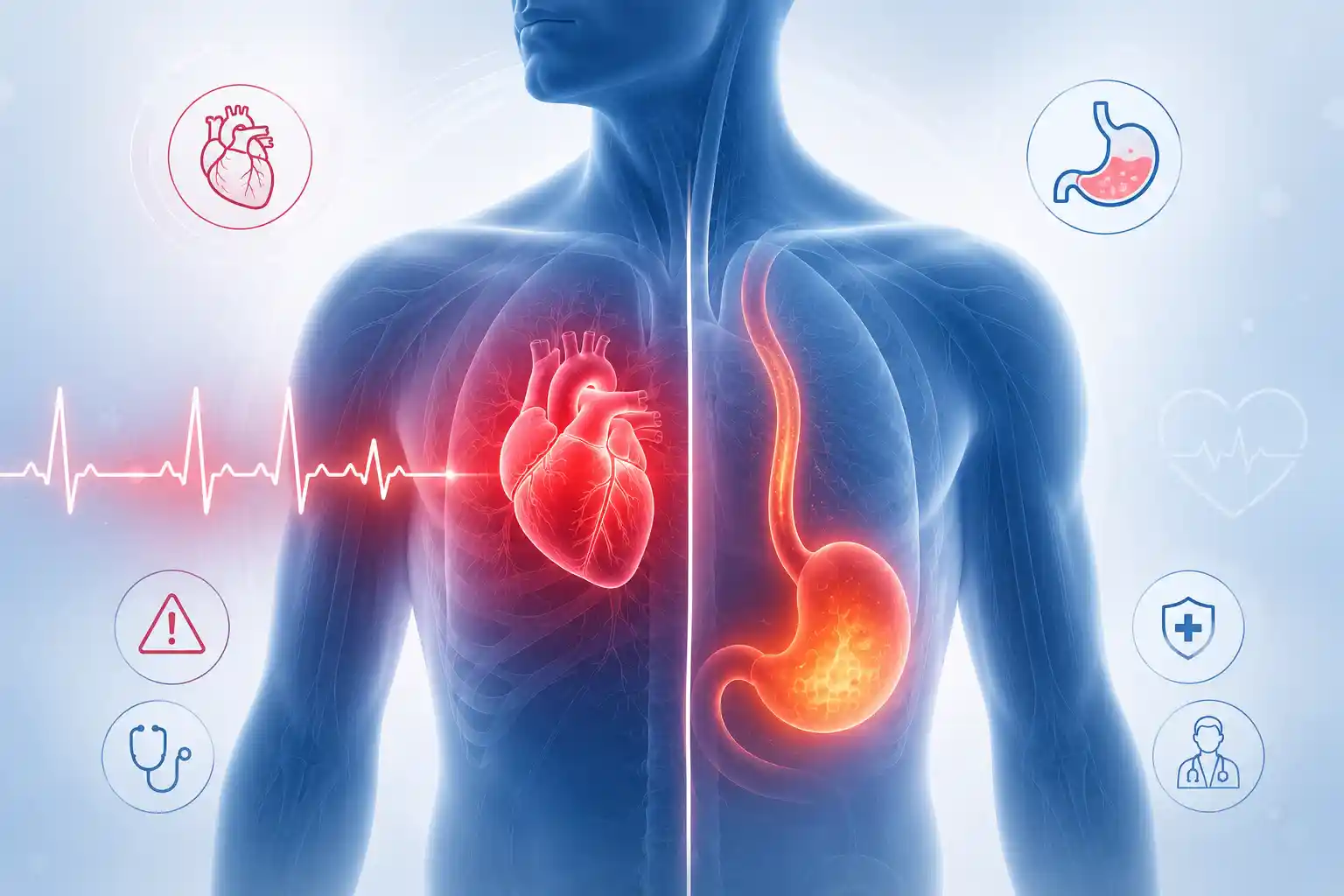
Chest pain can be confusing. Many people experience burning, heaviness, pressure, or tightness in the chest and immediately wonder whether it is acidity or something related to the heart. Often it is simple acid reflux, indigestion, or gas. But sometimes chest discomfort is an early warning sign of angina, coronary artery disease, or even a heart attack, which is why repeated or unexplained pain should never be ignored.
Knowing the difference between acidity-related pain and heart-related chest pain helps you decide when to manage symptoms at home and when to seek specialist cardiology care in Hyderabad. At Germanten Hospital, Attapur, the cardiology team evaluates chest pain, breathlessness, palpitations, high blood pressure, abnormal ECG findings, and suspected heart blockage for patients across the city.
Chest pain is not always a heart attack, but it should never be casually dismissed. The chest holds many important structures, including the heart, lungs, food pipe, muscles, and ribs. Pain from any of these can feel similar.
Many patients delay help because they assume the cause is acidity, stress, gas, or muscle strain. This delay can be risky if the pain is linked to reduced blood flow to the heart, which may start mildly and become serious over time.
Be more careful if chest pain appears during walking, climbing stairs, emotional stress, or physical work. Discomfort that eases with rest but returns with exertion may point to angina and needs a cardiology review.
Acidity, or acid reflux, happens when stomach acid moves up towards the food pipe. It can cause a burning feeling in the chest, a sour taste, burping, bloating, nausea, or throat irritation.
Acidity-related pain is commonly noticed:
• After spicy, oily, or heavy meals
• After tea, coffee, alcohol, or carbonated drinks
• When lying down soon after eating
• After bending forward
• With sour belching or a bitter taste
• With bloating, gas, or indigestion
• At night after a late dinner
This pain often feels like burning behind the breastbone and may ease with antacids, water, or avoiding trigger foods. But this is not a fixed rule. Heart pain can also feel like burning, heaviness, or indigestion, so self-diagnosis is unsafe when chest pain is new, severe, repeated, or comes with breathlessness, sweating, dizziness, or pain that spreads.
Heart-related chest pain is often caused by reduced blood flow to the heart muscle, usually due to narrowing or blockage in the coronary arteries. The way it feels can vary from person to person.
Common signs include:
• Pressure, tightness, heaviness, or squeezing in the chest
• Pain spreading to the left arm, shoulder, jaw, neck, back, or upper stomach
• Discomfort during walking, climbing stairs, or exercise
• Pain that eases with rest and returns with activity
• Breathlessness with chest discomfort
• Cold sweating
• Dizziness or light-headedness
• Nausea or vomiting with chest discomfort
• Unusual fatigue, especially in women, the elderly, and people with diabetes
• Palpitations or an irregular heartbeat
Some people feel no severe pain at all. They may notice only uneasiness, tiredness, or breathlessness similar to acidity. These quiet or unusual symptoms are common in diabetic patients, the elderly, and some women, and should be taken seriously.
This table shows possible differences, but it does not replace medical advice. When in doubt, it is safer to consult a cardiologist.
See a cardiologist if chest pain is repeated, unexplained, increasing, or linked to physical activity, or if you have risk factors for heart disease.
Consider a consultation if you have:
• Chest pain or tightness while walking or climbing stairs
• Breathlessness during routine activities
• Chest discomfort with sweating or dizziness
• Pain spreading to the arm, neck, jaw, shoulder, or back
• Palpitations or an irregular heartbeat
• Uncontrolled high blood pressure or high cholesterol
• Diabetes, obesity, or a smoking or tobacco habit
• A family history of heart disease
• A previous heart attack, angioplasty, stent, or bypass
• An abnormal ECG, TMT, 2D Echo, or cardiac blood test
• Chest discomfort that keeps returning despite acidity medicines
Do not wait for symptoms to become severe before getting them checked.
Schedule a cardiology consultation. If you have repeated chest pain, breathlessness, palpitations, high BP, an abnormal ECG, or chest discomfort that feels like acidity but keeps coming back, book an appointment with the cardiology team at Germanten Hospital, Attapur.
Chest pain needs emergency care if it is sudden, severe, or comes with warning signs of a heart attack. Do not wait for it to settle on its own.
Seek emergency help if you have:
• Severe chest pressure or heaviness
• Chest pain lasting more than a few minutes
• Pain spreading to the left arm, jaw, neck, back, or shoulder
• Sudden breathlessness
• Cold sweating
• Fainting or severe dizziness
• Nausea or vomiting with chest pain
• A rapid or irregular heartbeat
• Sudden weakness or extreme fatigue
• Chest pain in a known heart, diabetic, or high BP patient
In these situations, do not drive yourself. Ask a family member to take you to the nearest emergency department or call for emergency medical support.
The food pipe and the heart sit close together, so pain signals from the chest can overlap. This is why heart-related pain is sometimes mistaken for gas or acidity, and why some patients take antacids repeatedly and delay a heart check.
A simple guide: if chest discomfort is new, severe, exertional, or repeated, or comes with sweating, breathlessness, dizziness, or radiating pain, get a cardiac evaluation.
A cardiologist will first review your symptoms, risk factors, medical history, and current medicines. Based on your condition, one or more of the following tests may be advised.
An ECG records the electrical activity of the heart. It is commonly used when a patient has chest pain, palpitations, dizziness, or suspected heart attack symptoms.
A 2D Echo is an ultrasound of the heart. It helps assess pumping function, valves, muscle movement, and structural problems.
A treadmill test checks how the heart works during physical activity. It may be advised when symptoms appear during walking, climbing stairs, or exertion.
A Holter monitor records heart rhythm over a longer period. It helps with palpitations, skipped beats, dizziness, or irregular heartbeat symptoms.
Certain blood tests may be advised in emergency chest pain cases to check whether the heart muscle is under stress or injury.
If significant blockage is suspected, coronary angiography helps identify the location and severity of narrowing in the heart arteries.
Some people should be extra careful with chest pain, even when symptoms feel mild.
• People with diabetes, high blood pressure, or high cholesterol
• Smokers and tobacco users
• People with obesity or a sedentary lifestyle
• People under high stress
• Men above 40 and women after menopause
• People with kidney disease
• People with a family history of heart disease
• Patients who already had angioplasty, stenting, or bypass surgery
For these patients, chest discomfort should not be brushed off as only acidity. A timely cardiac check helps detect risks early.
Diabetic patients may not always feel classic chest pain during a heart problem. Some feel only fatigue, sweating, breathlessness, or indigestion-like discomfort, because diabetes can affect nerves and reduce pain perception.
If you have diabetes and notice repeated acidity-like chest discomfort, unusual tiredness, breathlessness, sweating, or reduced exercise capacity, consult a cardiologist. Regular heart screening matters for diabetic patients because they carry a higher risk of coronary artery disease.
Women may experience heart symptoms differently. Apart from chest pain, they may have shortness of breath, nausea, vomiting, back pain, shoulder pain, jaw pain, tiredness, or indigestion-like discomfort.
Because these symptoms are often mild or unusual, many women delay evaluation. Any unexplained chest discomfort, especially with breathlessness or fatigue, should be assessed by a heart specialist.
For patients looking for nearby cardiac care, location and timely access matter. Germanten Hospital is in Attapur, which makes specialist cardiology convenient for people from Attapur, Rajendra Nagar, Mehdipatnam, Tolichowki, Langar Houz, Nanal Nagar, Karwan, Kismatpur, Bandlaguda Jagir, Shamshabad, Manikonda, Gachibowli, Banjara Hills, and nearby areas.
If you are from these areas, the hospital offers cardiac consultation and diagnostic support under one roof.
Germanten Hospital, Attapur, provides advanced cardiac care with diagnostic support for heart-related symptoms. The cardiology department offers ECG and EKG, echocardiography, event monitoring, Holter monitoring, stress testing, and cardiac rehabilitation.
Dr. Mohammed Wasif Azam, Chief Consultant Cardiologist at Germanten Hospital, has more than 33 years of experience in cardiology and interventional cardiology. His areas of expertise include coronary procedures, angioplasty, pacemaker implantation, heart rhythm management, and advanced cardiac diagnostics.
This experience supports patients who need evaluation for chest pain, suspected heart blockage, an abnormal ECG, palpitations, high BP, breathlessness, and follow-up after cardiac procedures.
Book an appointment with a heart specialist. Do not ignore chest pain that feels unusual, repeated, or linked with exertion. Book a consultation with Dr. Mohammed Wasif Azam, Chief Consultant Cardiologist at Germanten Hospital, Attapur.
When you visit for chest pain, explaining your symptoms clearly helps the doctor choose the right tests and treatment. Share details such as:
• When the pain started and exactly where it is
• Whether it feels burning, tight, heavy, sharp, or squeezing
• Whether it comes after food or during walking
• Whether it spreads to the arm, jaw, shoulder, back, or neck
• How long it lasts, and whether rest or antacids help
• Any sweating, breathlessness, dizziness, or nausea
• History of diabetes, BP, cholesterol, smoking, or heart disease
• Current medicines and any previous ECG, Echo, TMT, angiography, or angioplasty reports
Clear information helps your cardiologist separate acidity-related discomfort from possible cardiac pain.
Chest pain can be due to acidity, indigestion, muscle strain, anxiety, or a heart-related condition. The challenge is that acidity and heart pain can feel similar, so any repeated, severe, exertional, or unexplained chest discomfort should be medically evaluated.
If your chest pain comes with breathlessness, sweating, dizziness, nausea, palpitations, or pain spreading to the arm, jaw, shoulder, back, or neck, do not delay care. If you have diabetes, high BP, high cholesterol, a smoking history, obesity, or a family history of heart disease, be even more cautious.
For patients in and around Attapur, Germanten Hospital offers cardiology consultation and cardiac diagnostics under one roof.
Acidity usually causes a burning sensation after food, a sour taste, burping, or bloating. Heart-related pain may feel like pressure, tightness, or squeezing and often appears during walking, stairs, or stress. If pain is repeated, severe, or comes with sweating, breathlessness, dizziness, or pain that spreads to the arm or jaw, consult a cardiologist.
Yes. Acidity and heart-related pain can feel similar because both cause discomfort in the central chest. That is why new, severe, or unexplained chest pain should not be self-diagnosed.
See one if chest pain is repeated, happens during exertion, spreads to the arm or jaw, or comes with breathlessness, sweating, dizziness, nausea, or palpitations. People with diabetes, high BP, high cholesterol, or a family history of heart disease should be extra careful.
Common tests include ECG, 2D Echo, TMT, Holter monitoring, cardiac blood tests, and coronary angiography, depending on your symptoms and risk factors. The cardiologist decides which test is needed after examination.
Yes. Diabetic patients, the elderly, and some women may have only mild or unusual symptoms such as fatigue, breathlessness, sweating, nausea, jaw pain, or indigestion-like discomfort. These should not be ignored.
No. Burning is commonly linked with acidity, but heart-related pain can also feel like burning or indigestion. If chest burning is new, severe, repeated, or comes with breathlessness, sweating, dizziness, or exertion, get a cardiac evaluation.
Yes. The hospital is in Attapur and is accessible for patients from Rajendra Nagar, Mehdipatnam, Tolichowki, Langar Houz, Bandlaguda Jagir, Manikonda, Gachibowli, Banjara Hills, and other nearby areas.
https://www.cdc.gov/heart-disease/about/coronary-artery-disease.html
https://www.heart.org/en/health-topics/heart-attack/warning-signs-of-a-heart-attack
https://www.nhs.uk/conditions/heartburn-and-acid-reflux/
https://www.mayoclinic.org/diseases-conditions/heartburn/symptoms-causes/syc-20373223